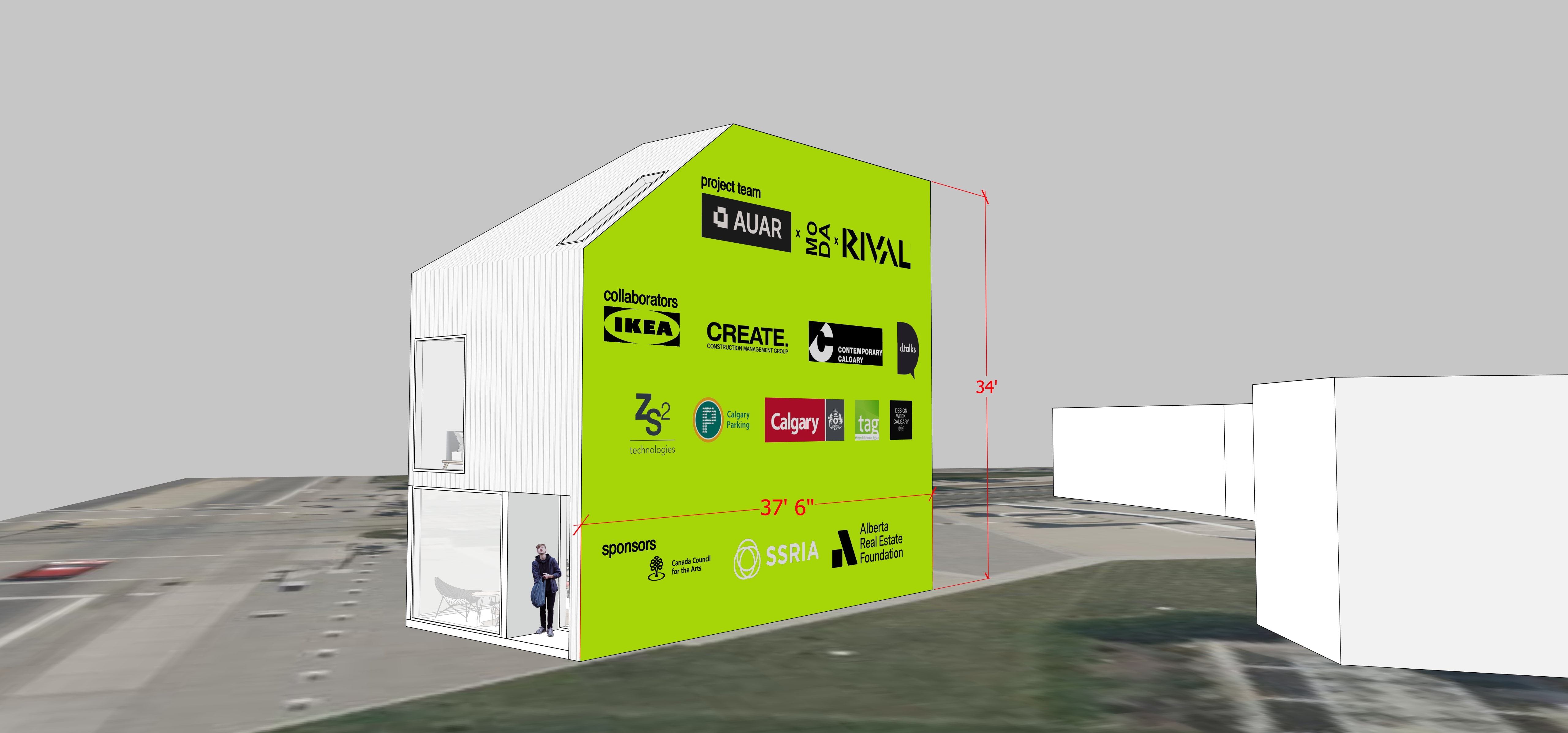
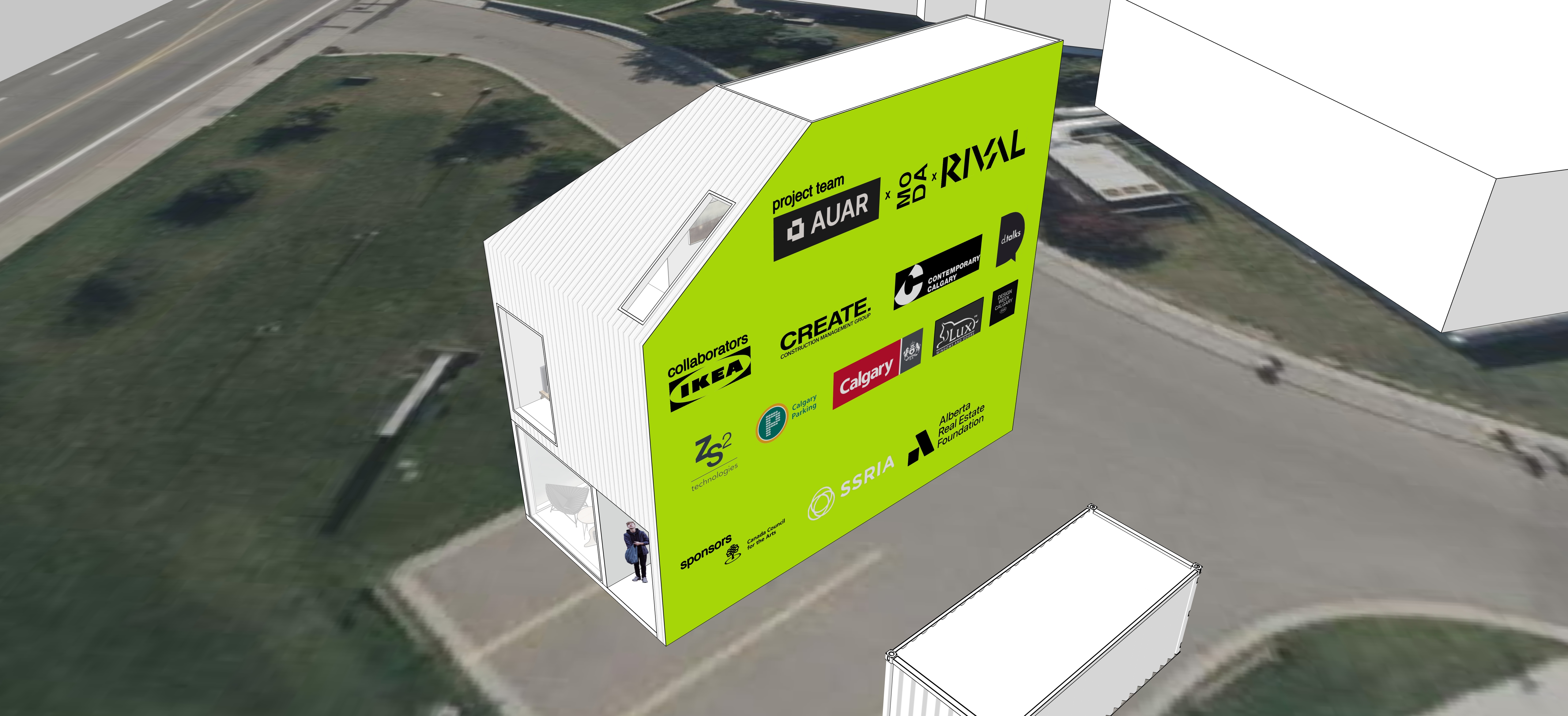
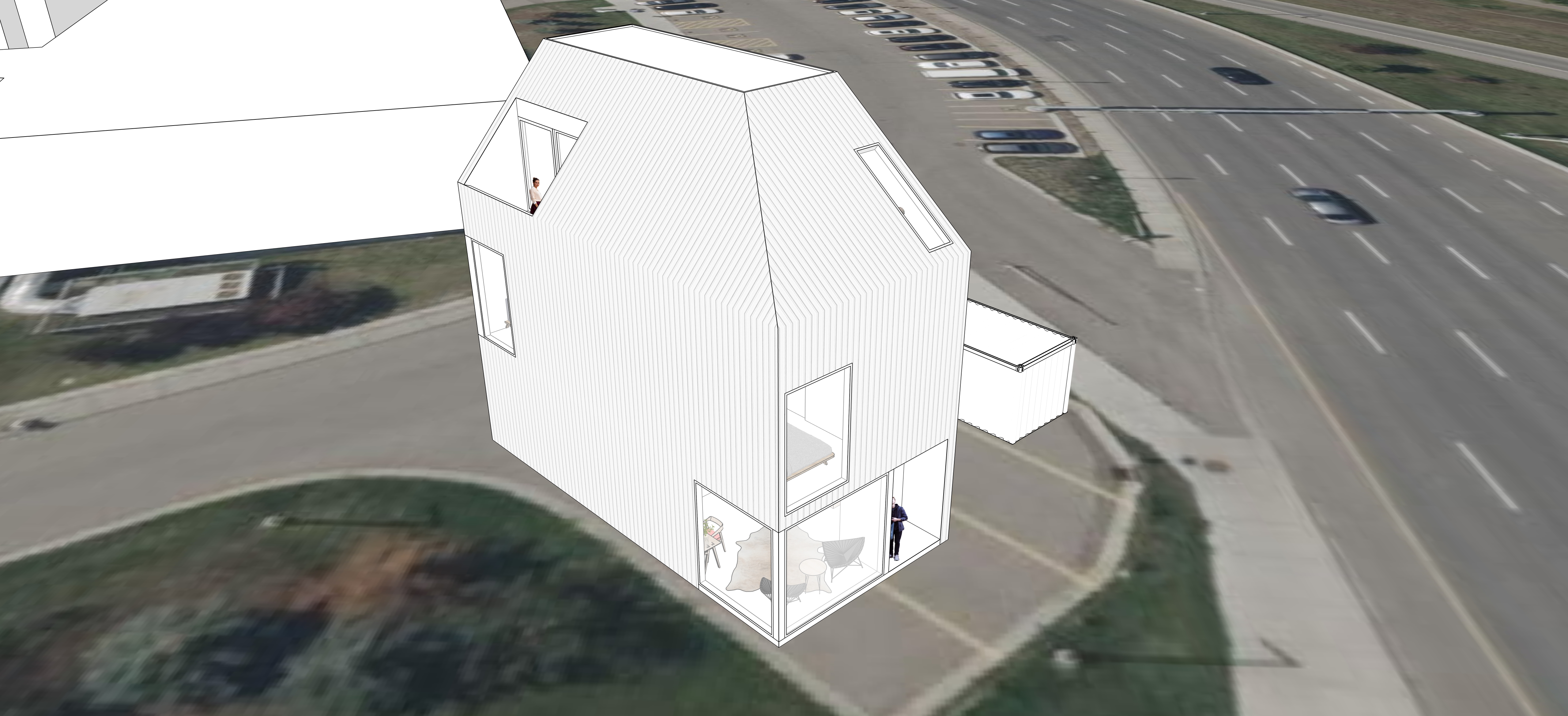
MODA, in collaboration with AUAR is to construct a robotically fabricated affordable housing prototype to demonstrate the efficacy of on-site robotic prefabrication and its contribution to sustainable, affordable housing.
The goal is to show how automated, low-carbon construction can reduce cost, emissions, and build time while creating a scalable, thoughtfully designed model for affordable housing across Canada.
Reducing GHGs Beyond Current Technologies
The project advances Canada’s wood-frame industry by replacing manual site-built methods with robotically fabricated timber panels that minimize waste, transport, and on-site inefficiencies. AUAR’s North American Life-Cycle Assessment shows net reduction in emissions of 135-141 kg CO₂-eq/m², demonstrating substantial embodied carbon reduction well below Canadian averages of 250-400 kg CO₂-eq/m² for new homes. LCD Consulting’s Whole-Life-Carbon study confirms the prototype performs 43–48% below Net-Zero targets, achieving near-zero waste and measurable carbon storage. Together, these innovations create a replicable pathway to cut embodied emissions by more than half while delivering homes up to 70% faster and 20% more affordably.
Problem and Barriers Addressed:
Canada’s housing sector faces labour shortages, rising costs, and outdated permitting that slow adoption of robotic methods, keeping affordable housing costly and carbon intensive.
How Barriers Are Overcome
A mobile robotic micro-factory fabricates components directly on site, reducing transport and supply-chain emissions. The project promotes human–robotic interaction and cooperation, where local trades and technicians work alongside automated systems- enhancing precision, safety, and up-skilling. Collaboration with the City of Calgary allows real-time testing of code and permitting integration. The prototype will also act as a public exhibition during Calgary Design Week 2026 to promote sustainable, low-carbon construction through innovative architectural design and construction methods.
Innovation and Scalability
PAST/forward establishes a distributed, small-scale robotic manufacturing model adaptable to urban infill or rural sites. Its digital-to-physical workflow-combining generative design, robotic lumber assembly, and modular re-use-can scale across Canada, positioning Calgary as a North American leader in embodied carbon reduction and human-robotic construction innovation.